One of my favorite things to do is planting things that are good for honeybees. What’s good for the bees is good for us! And the more variety, the better.
Honey is amazing. The more variety a bee has access to, the more amazing the honey. A close relative recently told me that she knew someone who bought and ate local honey wherever she traveled to in the world and never got sick while traveling. I’ve also heard many testimonies of people who treat allergies naturally by eating local raw honey.
I moved to the Canadian prairies from the Pacific Northwest a couple decades ago. After moving here I realized how much I loved watching the bees. One year I started tracking which plants I saw honeybees on throughout the growing season. I try to do this every year, but usually miss some. I find writing notes on a calendar to be very helpful.
Fall is already in the air at our place and it’s a great time to plant trees or perennials. They have time to get established before the ground freezes in a few months.
When choosing plants for honeybees (and other pollinators), I try to choose a few plants per season… some for spring, early summer, midsummer, and fall. Honeybees like to be efficient in their foraging, so it’s nice if they have access to mass plantings. Flowering trees and hedges are especially good for them.
If you decide to plant for honeybees, it’s very possible to get plants for free. Many trees can be grown from cuttings (like the poplar/willow family) or suckers (like lilacs, cherries, or raspberries). You can also collect wildflower seeds in the wild. There are lots of wildflowers growing in drainage ditches in our area. Friends, family, or neighbors are often willing to share from their own yards, too.
Something we enjoy doing in the fall is cutting dried wildflower stalks from our own yard, then spreading the seed along the country roadsides. We just collect the seed in a pail and toss small handfuls out the open car window. This is a nice way to get mass plantings for bees all over the countryside! We also spread the wildflower seeds all over our own country yard in the places that are not mown.
Here are favorite honeybee plants in our area according to my own observations over the years:
SPRING:
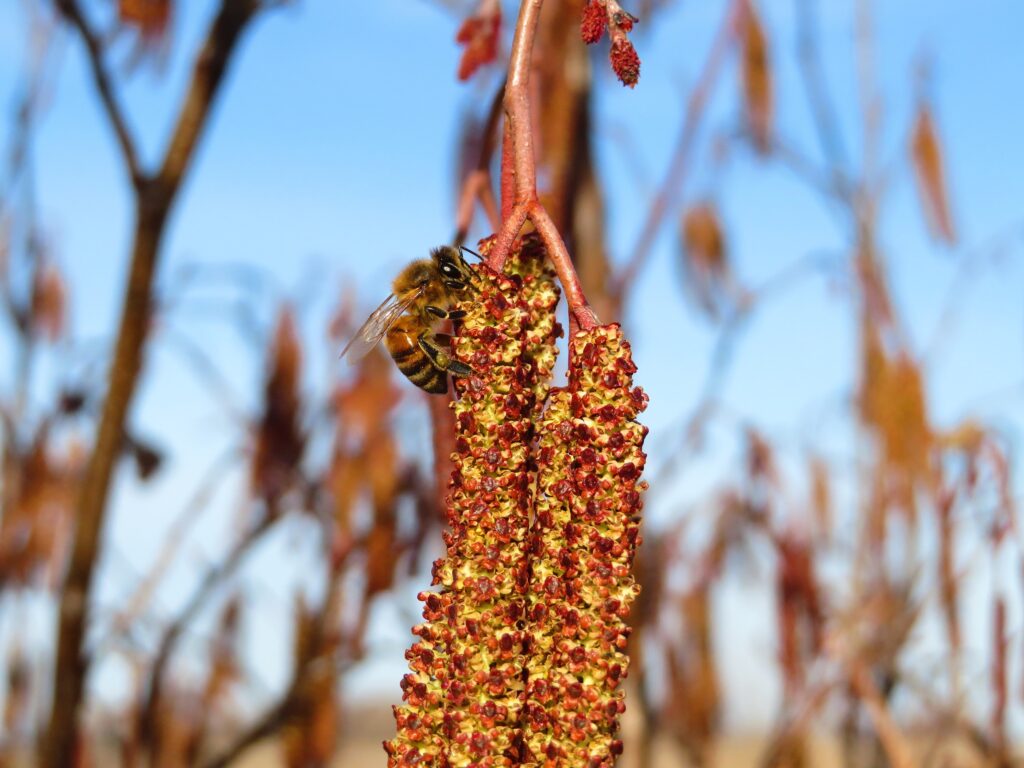
Speckled Alder (produces very early catkins, pictured above)
Pussy Willow
Dandelions
Chives
EARLY SUMMER:
Plum trees (best smell ever!!)
Apple trees
Cherry trees
Bramble berries (raspberries, blackberries, etc.)
Asparagus flowers
MIDSUMMER:
Linden trees
Lilacs
Comfrey
Bunching Onions (a perennial green onion)
Anise Hyssop
Bee Balm (Mondarda species)
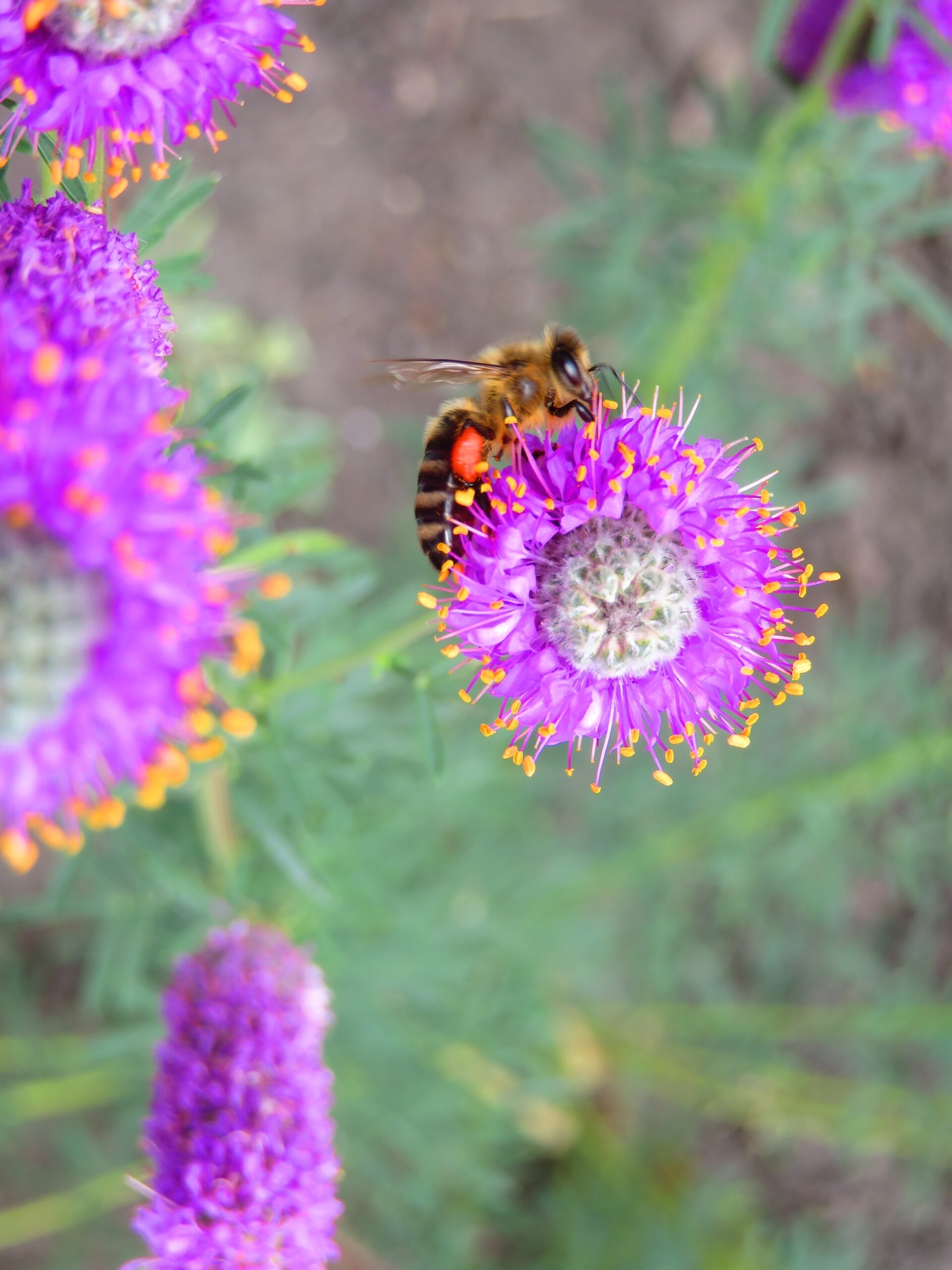
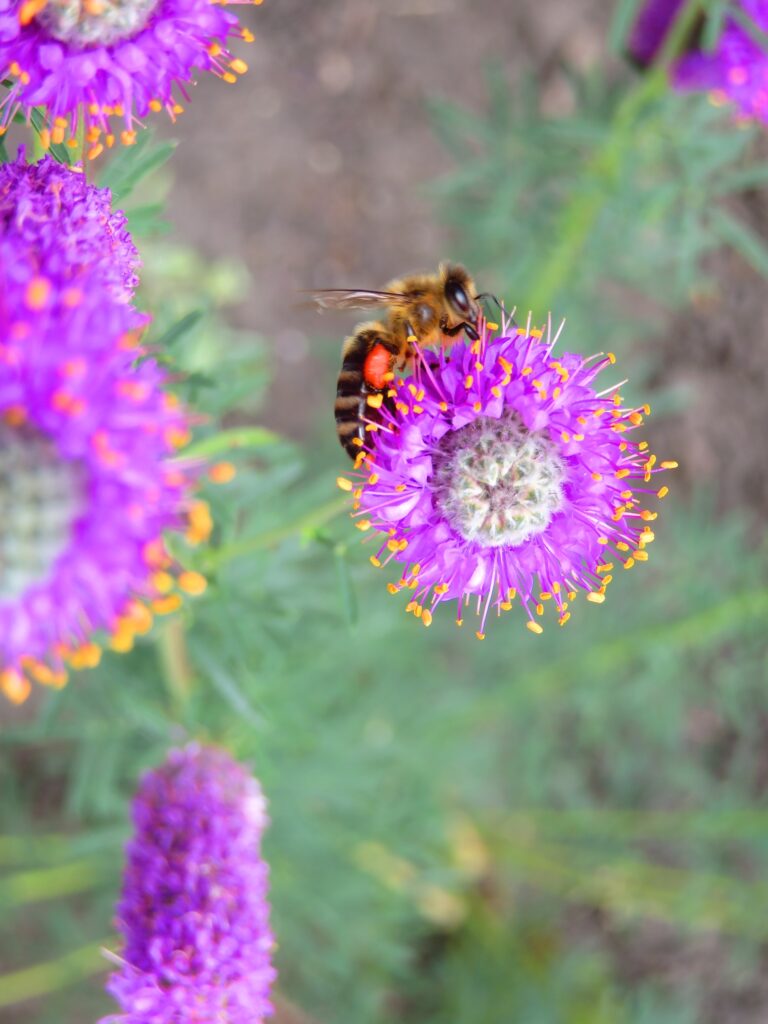
Purple Prairies Clover (Dahlia purpurea, pictured below – check out the neon orange pollen basket!)
Red Clover
Sweet Clover
Narrowleaf Sunflower (H. maximiliani)
Sunflowers (fields planted by farmers)
FALL:
Asters
Goldenrod
If you want to plant for honeybees, I highly recommend the book “100 Plants to Feed the Bees” by the Xerces Society. It’s a favorite of mine and one I read or reference often. They do a thorough job covering which plants do best in which regions of North America, which plants are good for which pollinators, and about how much honey bees can produce from certain plants, if applicable.
Just stopping to notice which plants the pollinators are foraging is the most important thing you can do to see which things to plant for them on your own yard. If you observe pollinators regularly, you’ll know more each year about how to help them.
Leave a Reply